


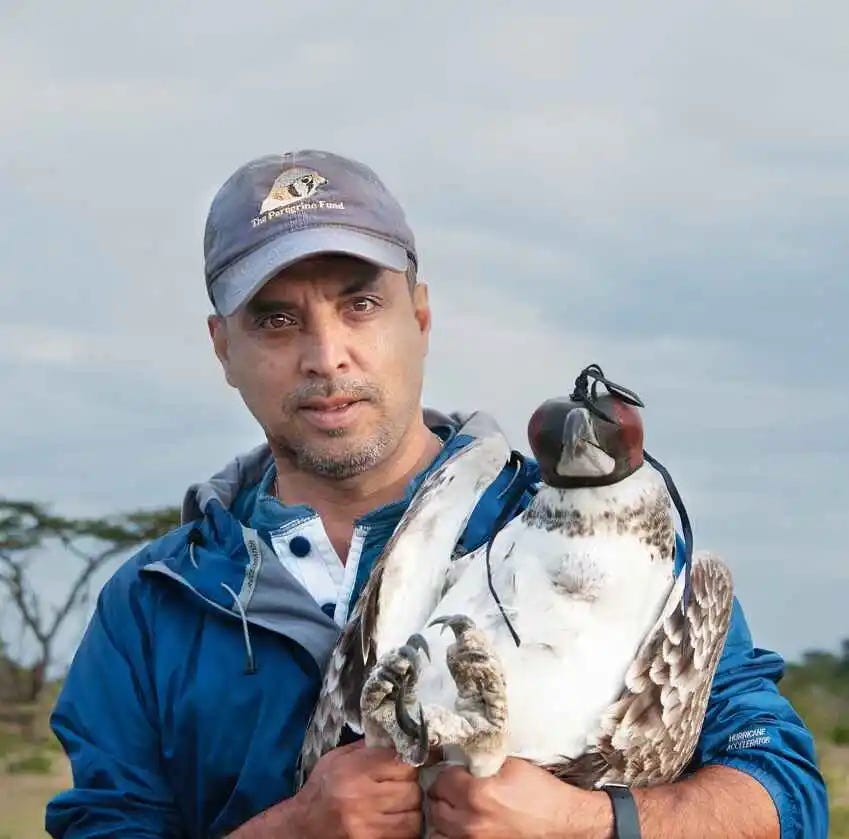
Dr. Munir Virani is a renowned conservation biologist, wildlife filmmaker, and photographer who has dedicated his life to protecting birds of prey. Born in Kenya and now based in Abu Dhabi, he currently serves as the Chief Executive of the Mohamed bin Zayed Raptor Conservation Fund. Early in his career, Dr. Virani played a key role in uncovering the reasons behind the collapse of South Asia’s vulture population in the early 2000s. He is a Whitley Award winner and a featured TED speaker, known for his work on tackling major threats to raptors worldwide. We met at the Conservation Biology Asia conference in Kathmandu in June and quickly bonded over our shared passion for storytelling. It took me a few weeks to process and publish it.
These days, I avoid rushing to publish as I am practising slow journalism. I first heard about slow journalism from Paul Salopek—a Pulitzer-winning journalist who has been walking across the globe for over a decade. I just wanted to publish it now. Will also release our video soon.
Ramesh: So when you say “birds of prey,” what is it actually?
Munir: These are birds that have very sharp bills, hooked talons, and forward-facing eyes. They are really the tigers, leopards, and lions of the sky. They’re predators. Out of about 10,000 species of birds globally, raptors or birds of prey make up about 5%—around 560 species across the globe.
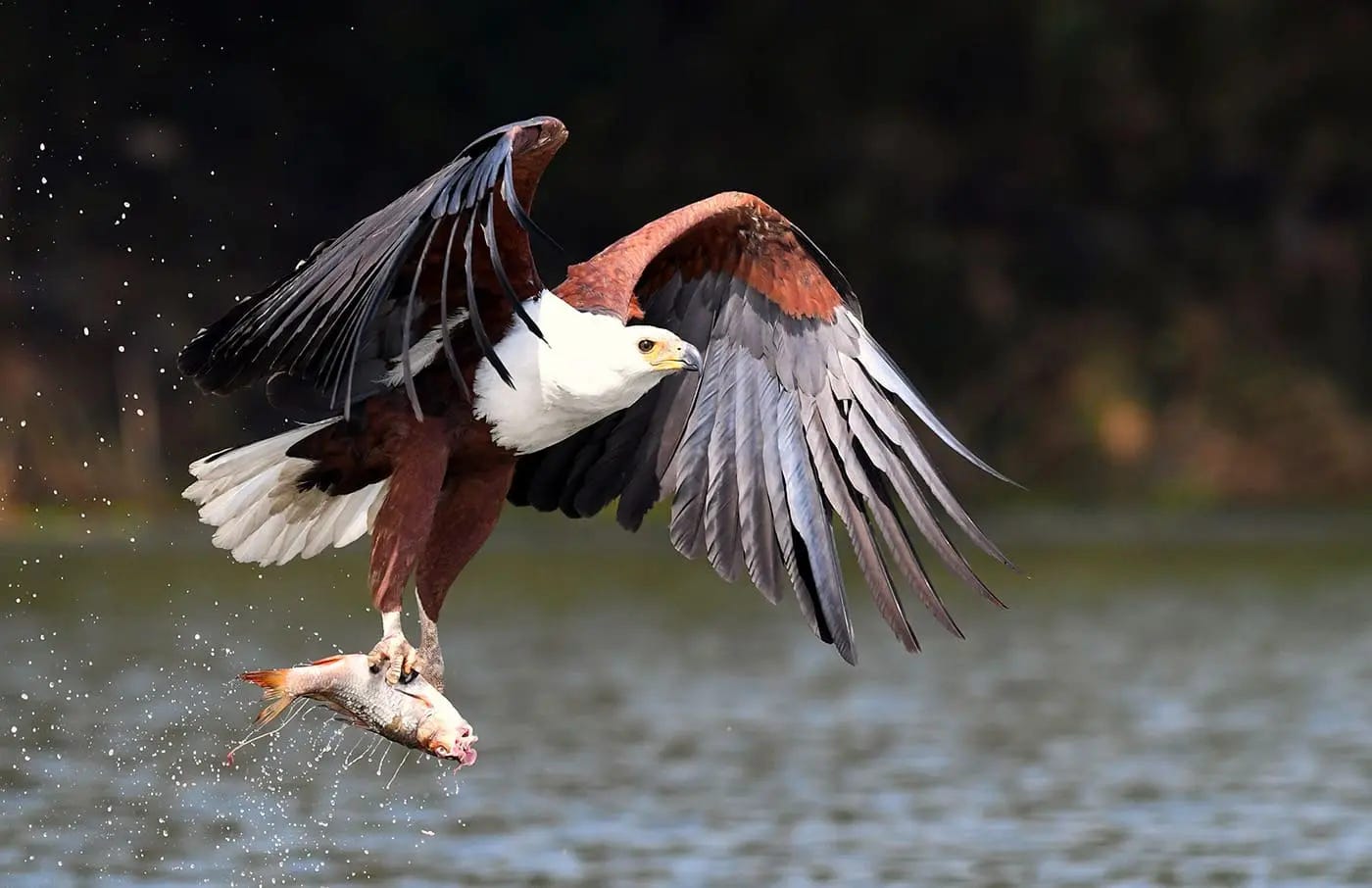
African Fish Eagle. Photo: Munir Virani (www.munirvirani.com)
Ramesh: What brought you to Nepal, and when was it?
Munir: There’s a long history. I must have been about five years old, sitting in my grandfather’s living room watching an old black-and-white TV set. I remember listening to the voice of Sir David Attenborough; people were sitting on an elephant, radio-tracking tigers, and you could see the mountains in the back. At that point, I told myself that one day I will make it to Nepal.
I completed my doctorate studies in 1999 and got married in early 2000. Literally two weeks after I got married, my boss phoned me. My job was supposed to be the Africa research biologist for the Peregrine Fund, but my boss asked, “Hey Munir, how would you like to go to India to see whether there’s a role for the Peregrine Fund to play?”
Vulture numbers had collapsed—gone down by 95%. Because the Peregrine Fund was involved in saving the peregrine falcon, the US Fish and Wildlife Service felt our involvement would be critical to understanding and reversing the problem.
I came to India first to assess the situation. Vultures were completely gone by then. Having seen that documentary when I was five, I saw my chance to go to Nepal. I traveled by road from West Bengal and took a 16-hour bus journey to Kathmandu from the border. My job was to find partners in Nepal to set up field and diagnostic studies to understand what was causing the mortalities.
Ramesh: Your team found out a molecule that was killing the vultures. What was the process?
Munir: First, this was a complete team effort involving the Peregrine Fund, and I was happy to contribute. My job was a fact-finding mission.
Three species—the Oriental white-rumped, Indian long-billed, and slender-billed vultures had collapsed, down by 95%, though there were still a few down in the Terai. To understand the cause, we needed fresh tissue samples stored in liquid nitrogen to send to labs in the United States. We worked with a tremendous virologist, Dr. Lindsay Oaks at Washington State University, who unfortunately passed away later.
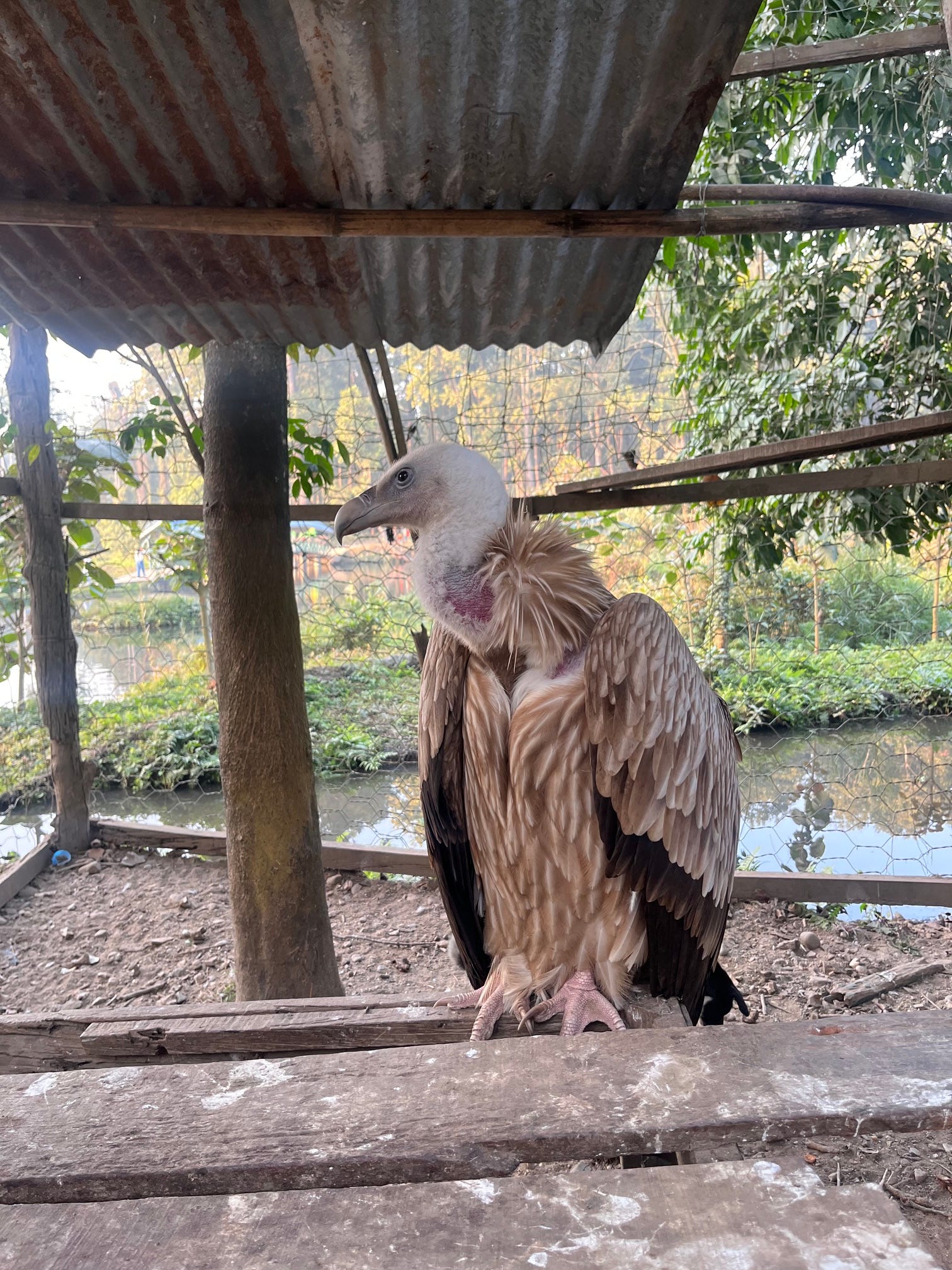
A rescued Himalayan vulture in Betana wetland in Belbari, Morang. Photo: Ramesh Bhushal
Ramesh: It must had been tough to take genetic material out of these countries and carry out investigations, isn’t it?
Munir: It was a very tough thing. That’s where Pakistan came in. India and Nepal have very strict laws against exporting DNA material, so I knew progress on that front would be difficult there. We did start programs in both countries; in Nepal, we worked with Bird Conservation Nepal at Koshi Tappu Wildlife Reserve, where a student we supported monitored nests from 2000 to 2002 and saw a catastrophic drop.
We succeeded in Pakistan, partnering with the Ornithological Society of Pakistan. Thousands of vultures were still there, which was baffling, but we were also finding many dead birds. We had students monitoring 1,800 nests across the country. The NCCW (the wildlife regulatory body in Pakistan) gave us permission to export tissue samples to the US.
Ramesh: What did you find?
Munir: We looked at their diet—livestock carcasses and wanted to find what was causing kidney failure in vultures. When you opened a dead bird, internal organs were covered in a white chalky paste of uric acid. Diclofenac stood out. When Lindsay tested four samples, all four were positive. We nailed it in 2003 after four years of work.
Ramesh: You went back to Pokhara recently, also called the capital of raptors in Nepal. What did you see after 23 years?
Munir: I went to Pokhara because one of my former students, Dr. Tulsi Subedi, now a leading raptor expert in Nepal, runs a site 45 minutes outside Pokhara called Thulakharka. It’s one of the best locations to observe migratory raptors coming from the north toward India. It was extremely nostalgic to see white-rumped and red-headed vultures back in the skies. Twenty-six years ago, you couldn’t have seen those birds there.
Ramesh: You mentioned that every three seconds, a bird is electrocuted or killed—nearly 10 million a year from electrocution alone, forget about other causes. What is the global status of birds right now?
Munir: Humans and birds go back a long way—a recent study showed humans have been associated with pigeons for 3,500 years. Right now, there’s a huge demand for energy, including renewables like wind, solar, and hydro. While electricity is necessary, the issue lies in how the distribution networks are constructed. Old power lines used wooden poles with T-frames and insulators, which were virtually 100% safe. Now, wooden poles are being replaced with cheap concrete ones containing steel rebar and metal cross-arms, where everything is exposed.
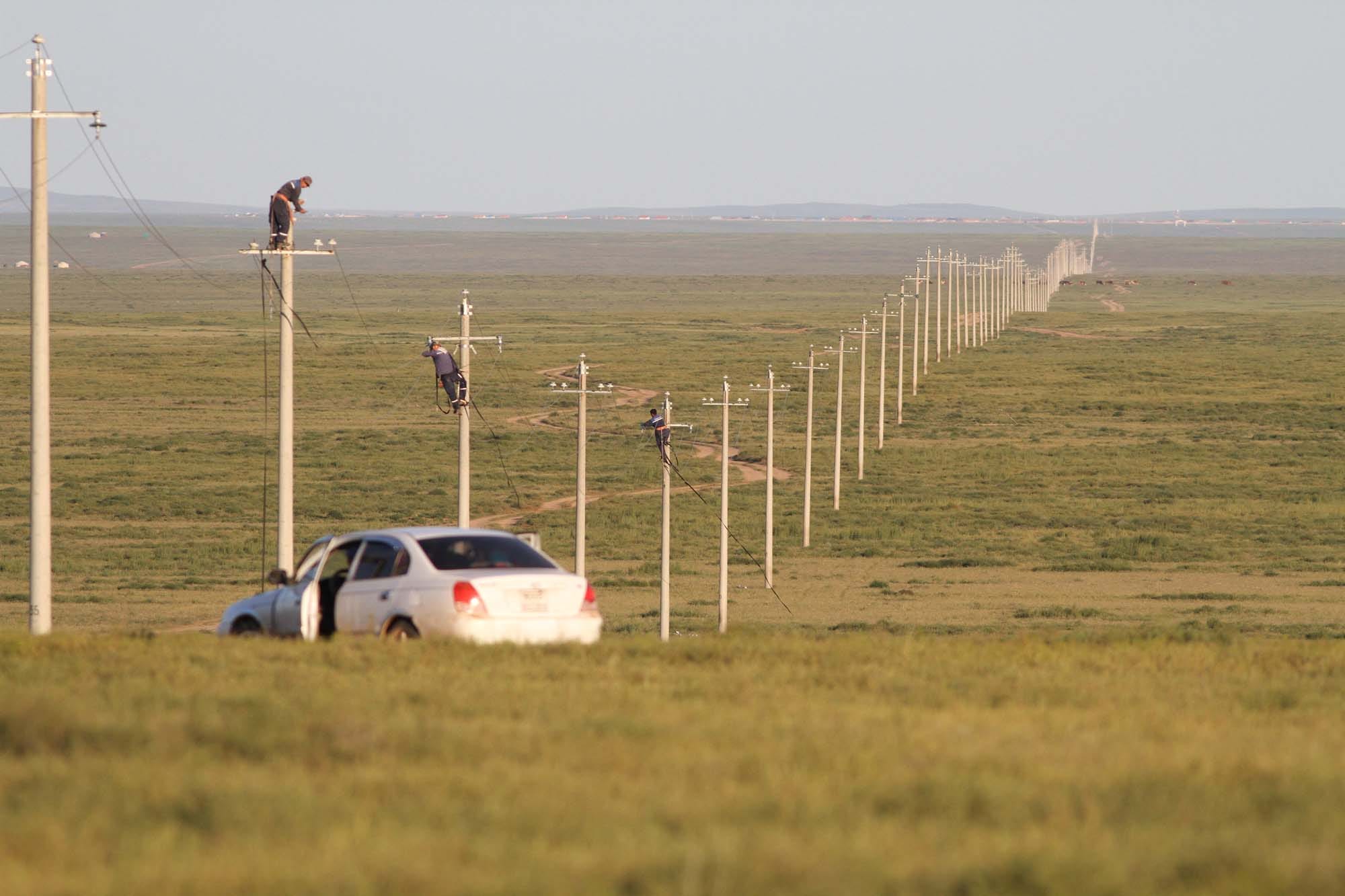
Pole fixation work in Mongolia: Photo: Mohamed bin Zayed Raptor Conservation Fund.
In big grasslands like Mongolia, raptors sit on power poles to hunt rodents like voles, also called field mice. When they land on these power lines, they touch two phases or a phase to ground, complete the circuit, and get zapped. Every three seconds, a bird dies of electrocution globally because power poles are being put up without proper design.
Munir Virani’s recent TED talk.
Ramesh: Is it expensive to fix them?
Munir: I’ll give you the example of our work in Mongolia through the Mohamed bin Zayed Raptor Conservation Fund, based in Abu Dhabi. Falconry is an important cultural heritage in the Arabian Peninsula, where the Saker falcon is revered.
In Mongolia, power lines were killing 18,000 birds of prey every year, including 4,000 Saker falcons. The UAE invested in local partnerships with the Mongolia Bird Conservation Center, and since 2019, we have insulated 27,000 poles covering 3,000 kilometers of lines across 80% of Mongolia’s landscape. This has saved 18,000 raptors annually. It costs roughly $40 per pole, so it’s a very doable fix that should be scaled up globally.
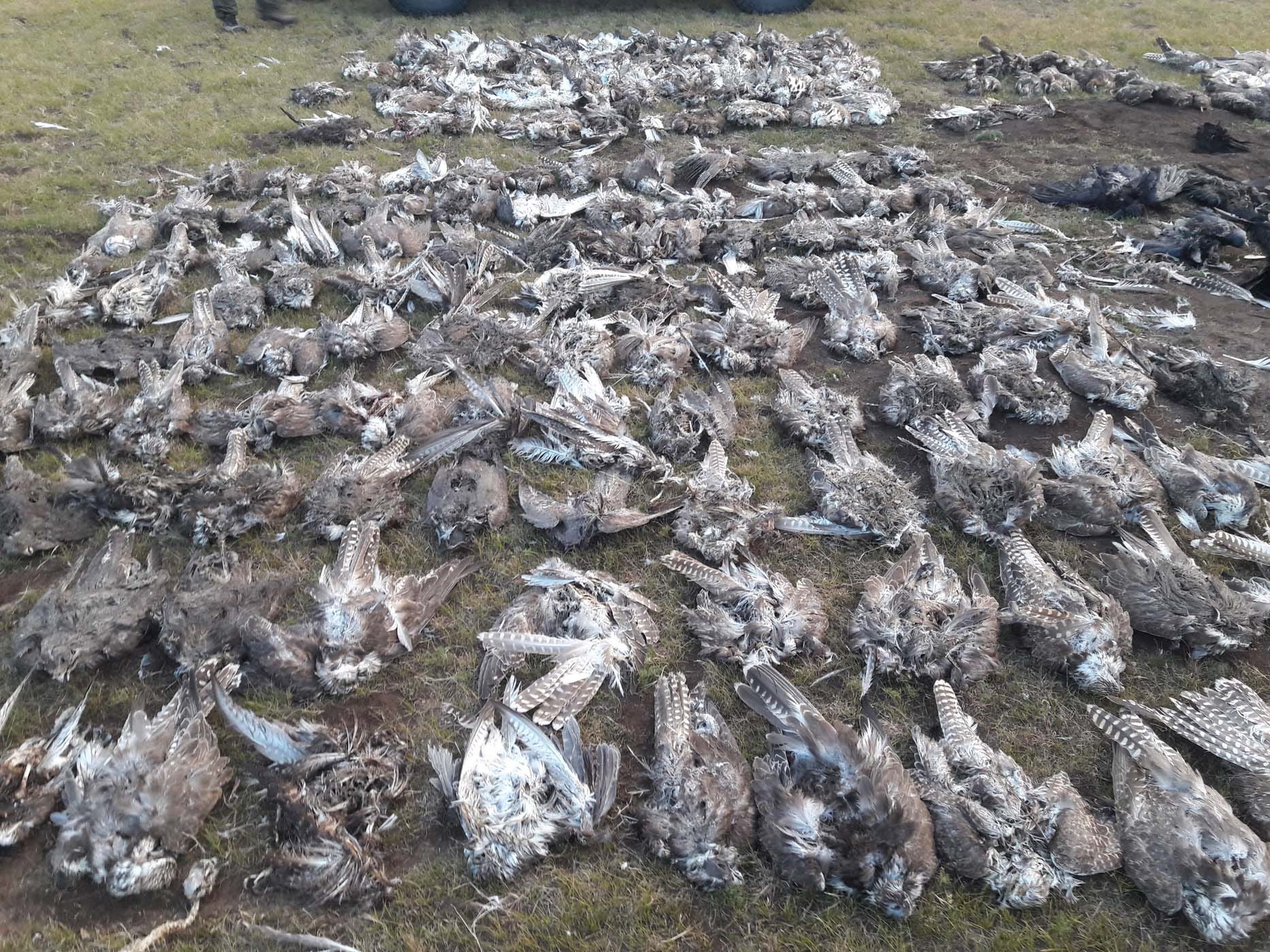
Raptors electrocuted in Mongolia. Photo: Mohamed bin Zayed Raptor Conservation Fund
Ramesh: Do people take birds for granted?
Munir: To some extent, yes. Historically, people shot birds of prey in places like the UK and US before awareness grew. It comes down to education about the ecosystem services birds provide. For instance, the crash of vultures in India led to an estimated half a million human deaths because the disappearance of vultures allowed feral dog populations to surge, spiking rabies cases. India was spending $1.5 billion annually treating rabies, a service vultures previously provided for free.
We live in a complex age with economic, political, and daily struggles. However, I was impressed at this conference to see many young, enthusiastic people doing conservation work on their own dime. In India, for example, young researchers are studying dusky eagle owls, vultures, mountain hawk eagles, and sparrows. Nepal needs to inspire this young generation.
Ramesh: When you’re not thinking about birds, what do you do?
Munir: I spend some time playing golf, singing, painting, and writing. Writing is very therapeutic for me. But the best thing is picking up a pair of binoculars and going outside. The biggest challenge today is getting young people off their phones and out into nature.
Ramesh: Your message to the people who are reading this interview?
Munir: Take a pair of binoculars and get out of your home. You will never regret it, and it will make you a better person. Get in touch with local bird organizations and volunteer. Giving up cricket to pursue bird conservation completely changed my life, and I have no regrets. You don’t necessarily have to do research; you can just enjoy the sky.
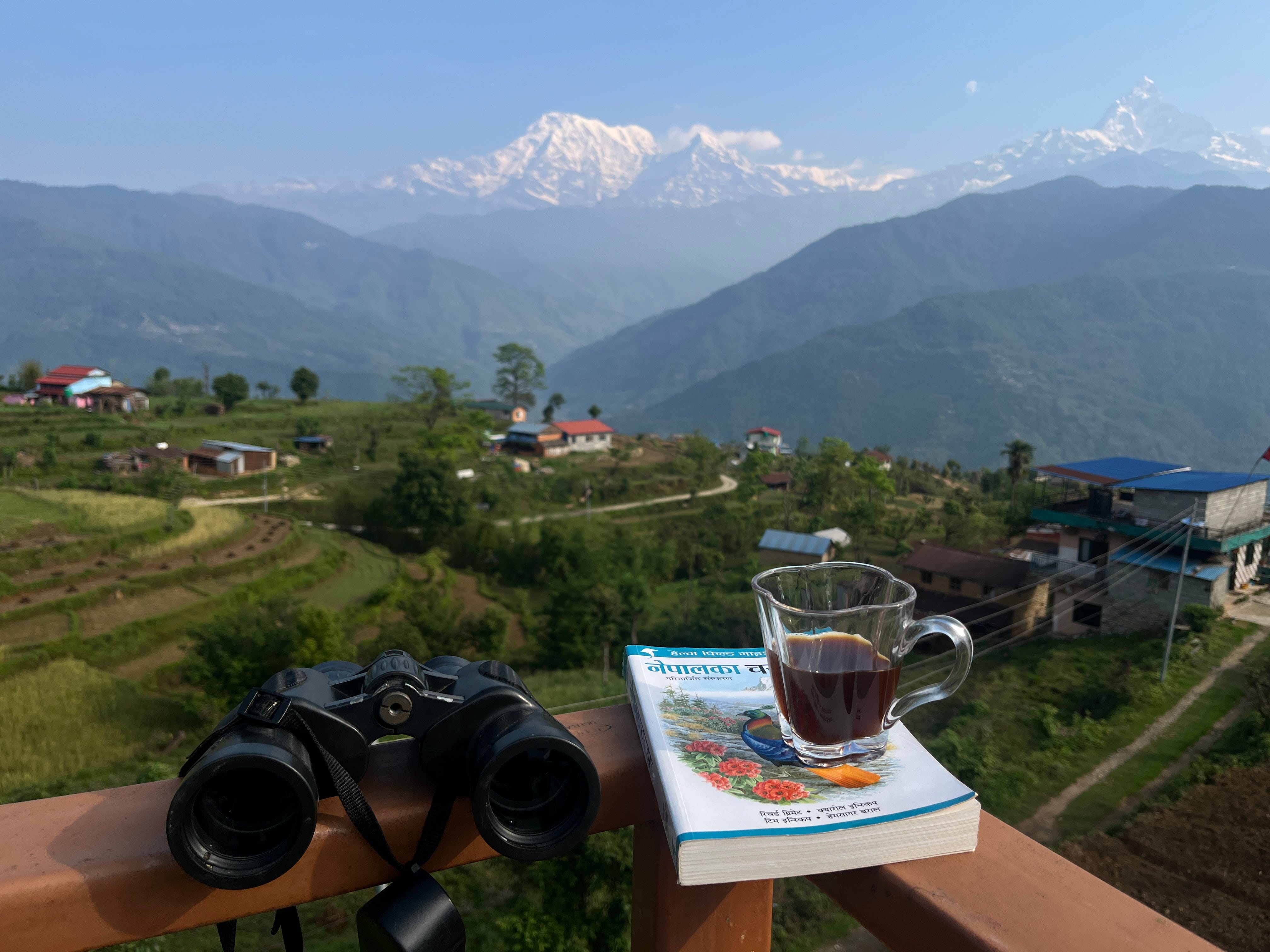
A pair of binoculars, a cup of coffee, and a bird book facing the Annapurna mountain range in Pokhara. Photo: Ramesh Bhushal
Ramesh: If people want to reach out to you, where can they find you?
Munir: They can find me through our website at mbzraptorfund.org. I also write a Substack called Jam Side Up.
Ramesh: What is the meaning of that name?
Munir: A mentor gave me that nickname because he said I always land “jam side up.” If toast falls jam side down, you can’t eat it; but if it lands jam side up, you can pick it up and eat it. It refers to being fortunate in life. The Substack covers birds, belonging, and the “beautiful mess” of conservation and life.
Trailer of a film on bearded vultures by Kiran Ghadge and Munir Virani.
For his photography, you can visit here.