

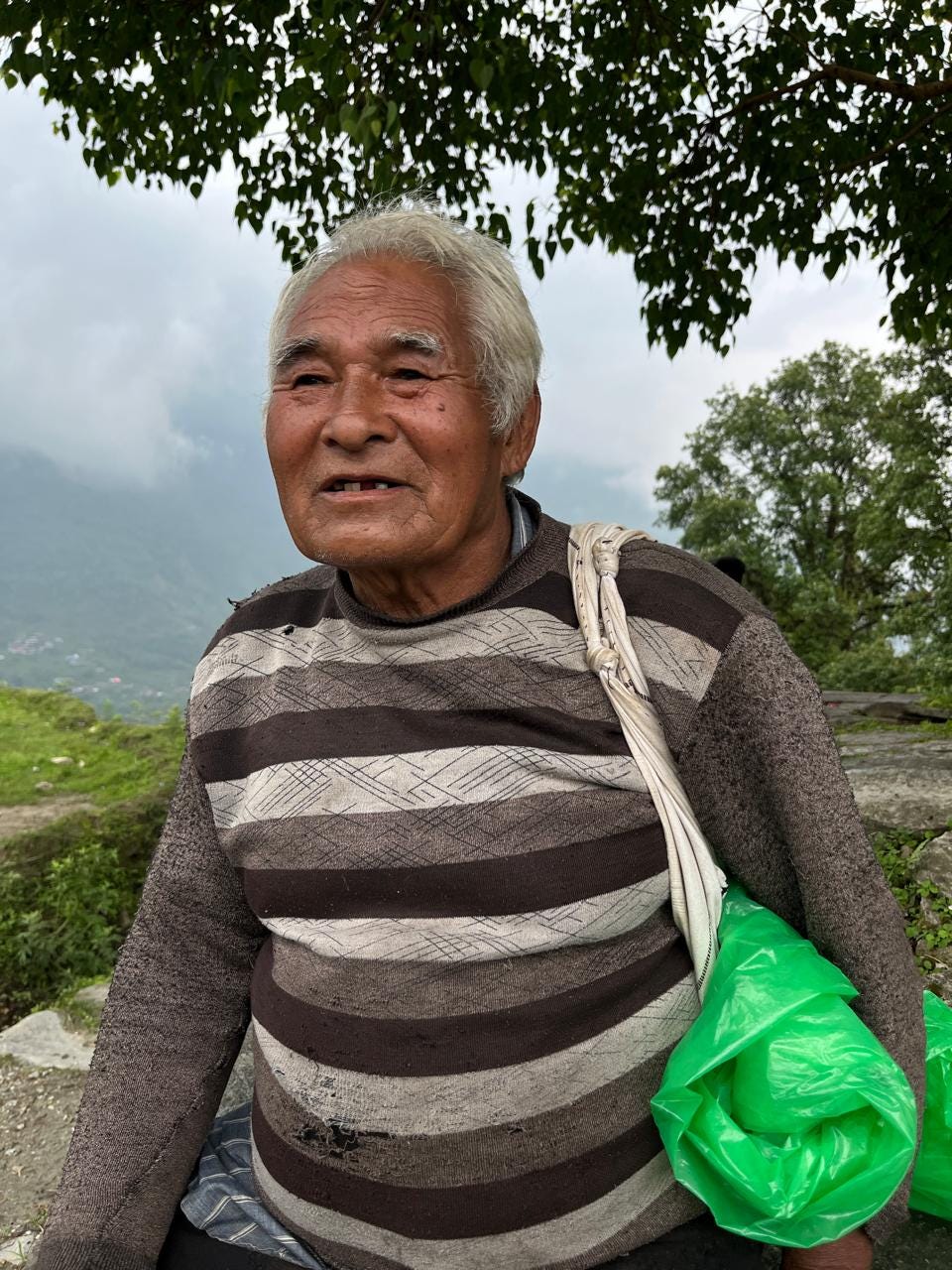
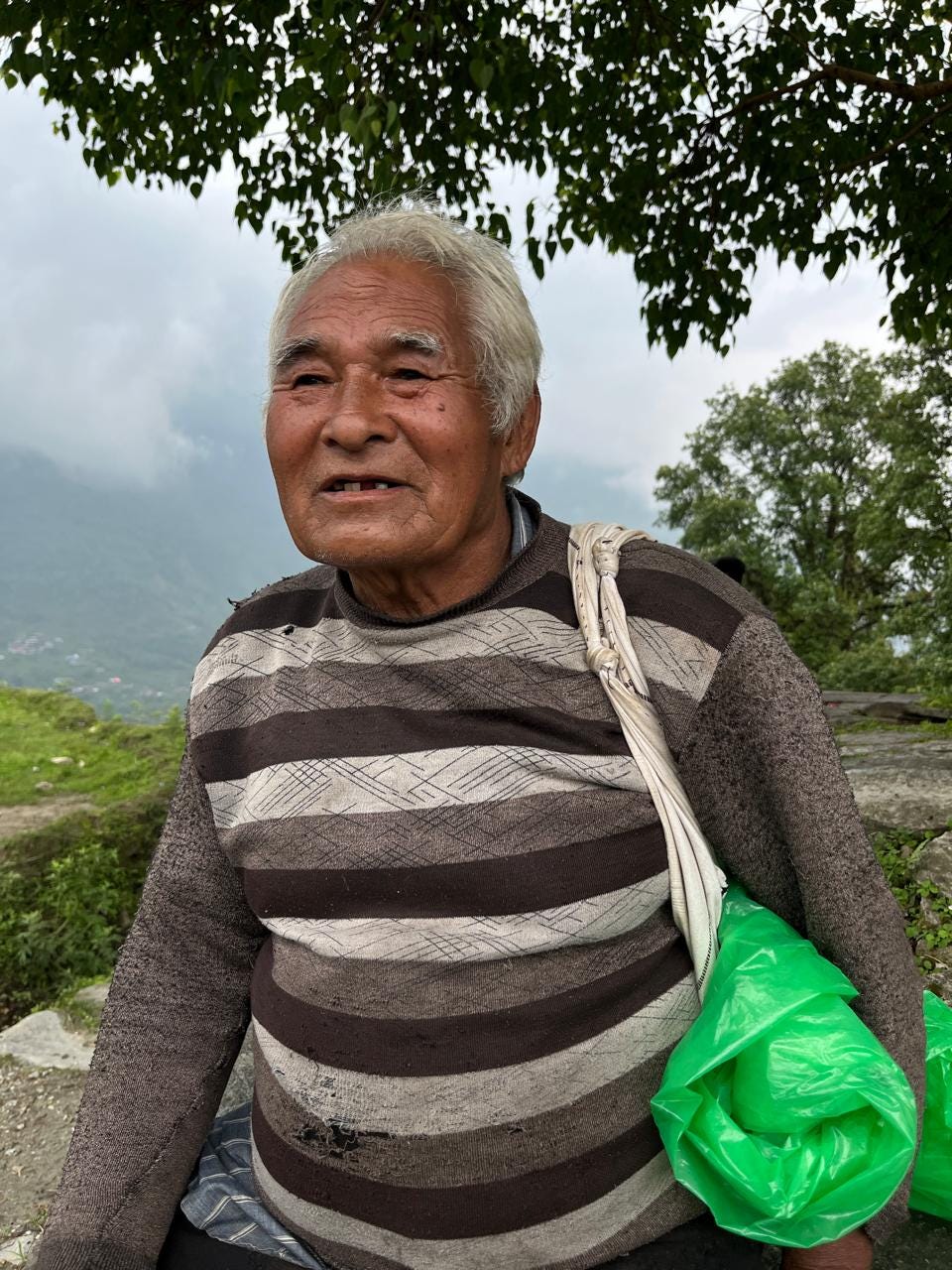
Dambar Bahadur Gurung in Lwang village. Pic: Ramesh Bhushal
By Ramesh Bhushal
I am back from the mountains. In fact, I returned over a couple of weeks ago, but you know it takes time to write things. And for those like me who think more and write less, it takes even longer. I read somewhere that thinking is not writing. Writing is putting something on paper or a computer. But thinking is part of the process, right? Either way, only thinking won’t cut it; get some ink on paper.
Am I giving advice? Oh, that’s not what I wanted to do. But you know, sometimes you should tell people how knowledgeable you are just to lure them into reading your work. Believe me, though, I am not doing it that way here.
In Nepal, when you say you are back from the mountains, it really doesn’t mean you are back. Generally, you are just back from one mountain to another. We mostly do mountain-hopping. I am back from the Annapurna mountain range in western Nepal. If you don’t know what it looks like, here is a picture for you.
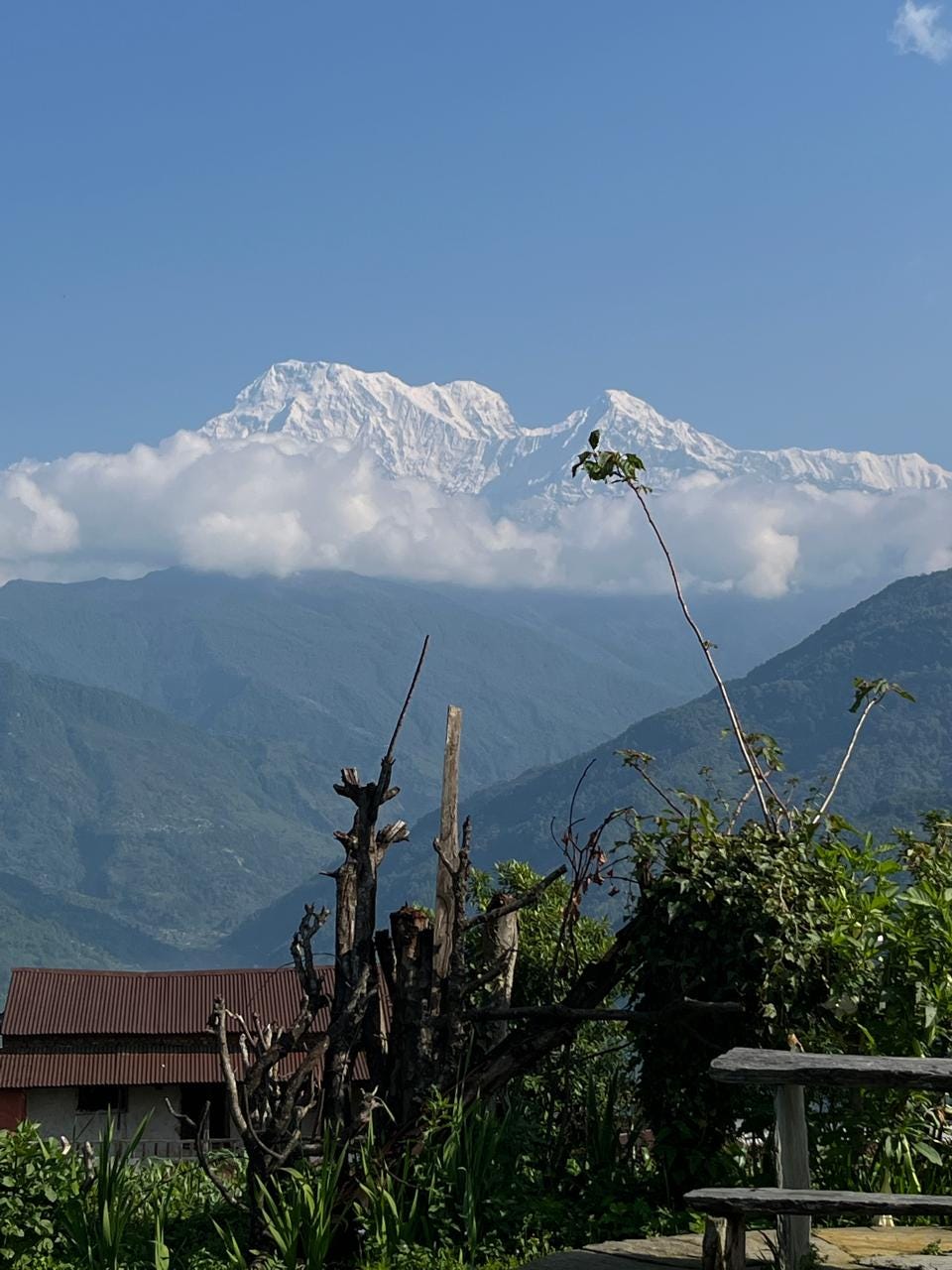
Annapurna mountain range as seen from Astam. Pic: Ramesh Bhushal
If you haven’t read about what it looked like in the 1950s, look up Annapurna by Maurice Herzog—a formidable French climber whose book sold millions of copies.
I wish my book had sold a million so that I could have bought a beautiful piece of land near these mountains, built a house with a wonderful library facing those lofty peaks, and watched the drifting clouds. But no worries, I can still manage a few things. My book Chhalbato- Kailash Dekhi Ganga Samma ( a 2000 km journey from Tibet to India following the Karnali river that flows through western Nepal) was among the bestsellers in 2025 and won the Padmashree Literature Award, which came with a $2,000 USD prize. I won’t reveal what I received from my publisher 😊, but I earned enough to make multiple trips back to these mountains and maybe start writing another book.
To me, Annapurna Eco Village in Astam is like a home. In 2024, I finalized my book there by spending a couple of weeks. I am welcome anytime at a discounted rate, and they even say I can stay in their house if I want. Doesn’t that sound cool? I don’t need to buy a house; I just need to spare some time to go there often. The owner, Bishwo Adhikari, and his two brothers run this eco-lodge, and it is genuinely eco-friendly. Don’t get confused by the word “eco,” as it is just a buzzword for many hoteliers in Nepal. Merely adding “Eco” to your name doesn’t make you sustainable, but the place I am talking about is a good Eco.
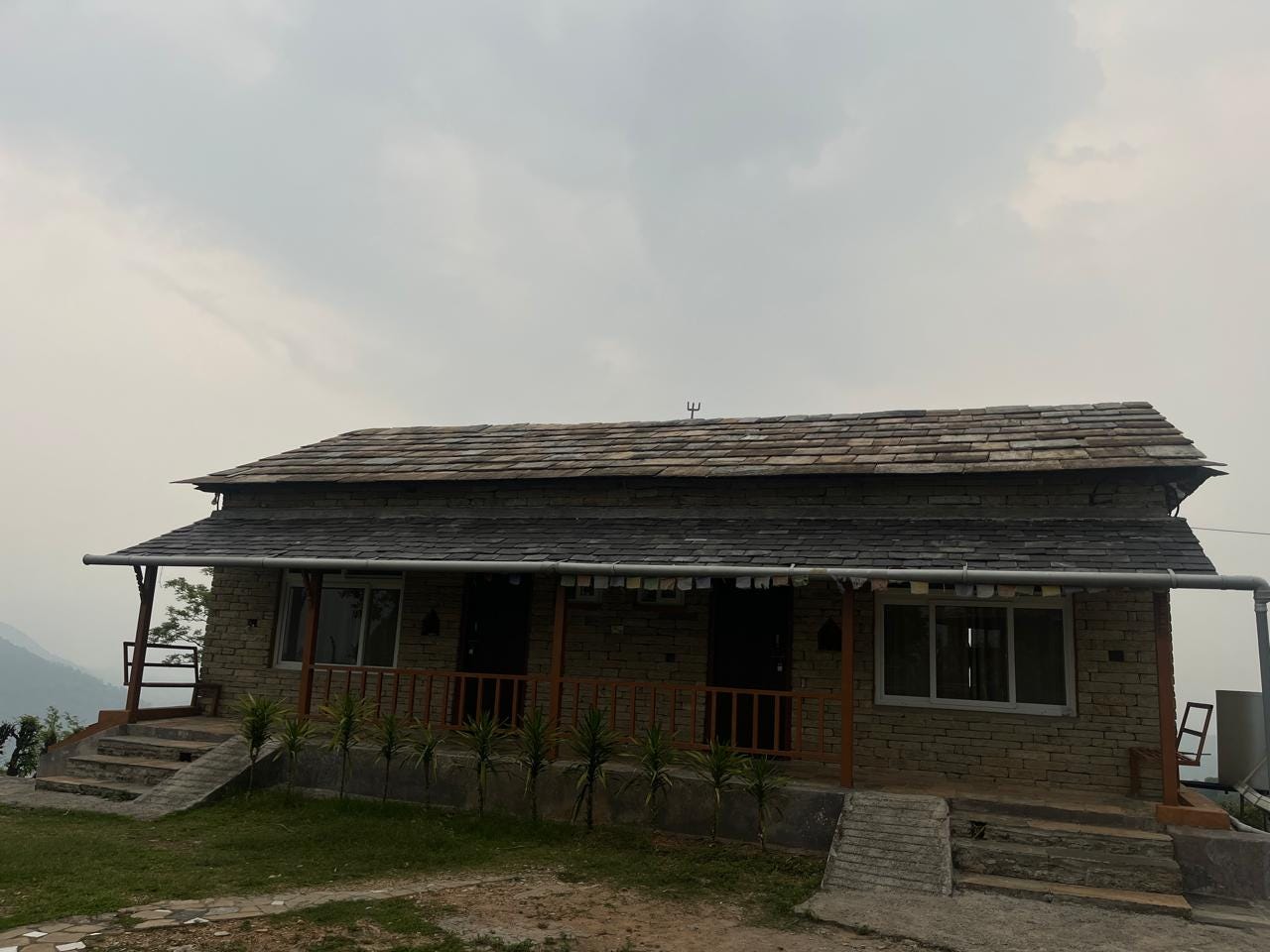
My room in Annapurna Eco Village in Astam: Pic: Ramesh Bhushal
At Annapurna Eco Village, they don’t have hot water in the bathroom; you must fill a bucket from a solar tap or a firewood-heated tank. In the evenings, a zigzagged metal pipe under the firewood transports hot water to a nearby tank that you can use the next morning. That’s a bit of Eco, isn’t it? They also use sand filtration technology for drinking water. There are no plastic bottles, and you can get as much water as you need within the package rate. It’s rare now in Nepal for hoteliers not to force plastic bottled water on you. Wherever you go, they first bring you a plastic bottle and charge you. It’s a shame. In a country that has 6,000 rivers and rivulets and drains billions of cusec of water every year, it’s a shame to charge people for a bottle of water. We could have used traditional ways to serve water, conserved our springs, and cleaned our rivers.
Don’t even talk about clean water. I am writing this from a cafe in Patan, but if you walk 10 minutes north, you will see how filthy the Bagmati, our holiest river, actually is. It’s a dead river. Most of the time it’s just sewage. That’s how we have developed this country. I shouldn’t talk badly about my country; our youngest prime minister might send the police.
Oh, wait. He might just say, “What the f*ck am I doing?” It’s a normal phrase in Nepal nowadays. A few months ago, he said, “F*ck America, f*ck China, f*ck India.” If you can f*ck them, who else do you need to defeat and become a superpower? Don’t ask me; I only have words.
I spent a week around the Annapurna mountains, though it was just a two-to-three-day hike in between. Three days is a peanut for many Nepalis. I walked a whole day just to catch a bus when I was seven back in 1990 and walked over three weeks continuously to write my book. I was born near Pokhara in Parbat district. I love mountains, and I love walking. Walking used to be a way of life when there were no vehicles and no electricity. This time, I walked solo. I talked to the stone-paved trails, which we call Dahar (डहर) in Nepali, listened to the birds chirping around, and drank water from springs. Nowadays, those old trails are being replaced by black-topped roads or cemented, uniform steps. Our model of development just hates every old thing.
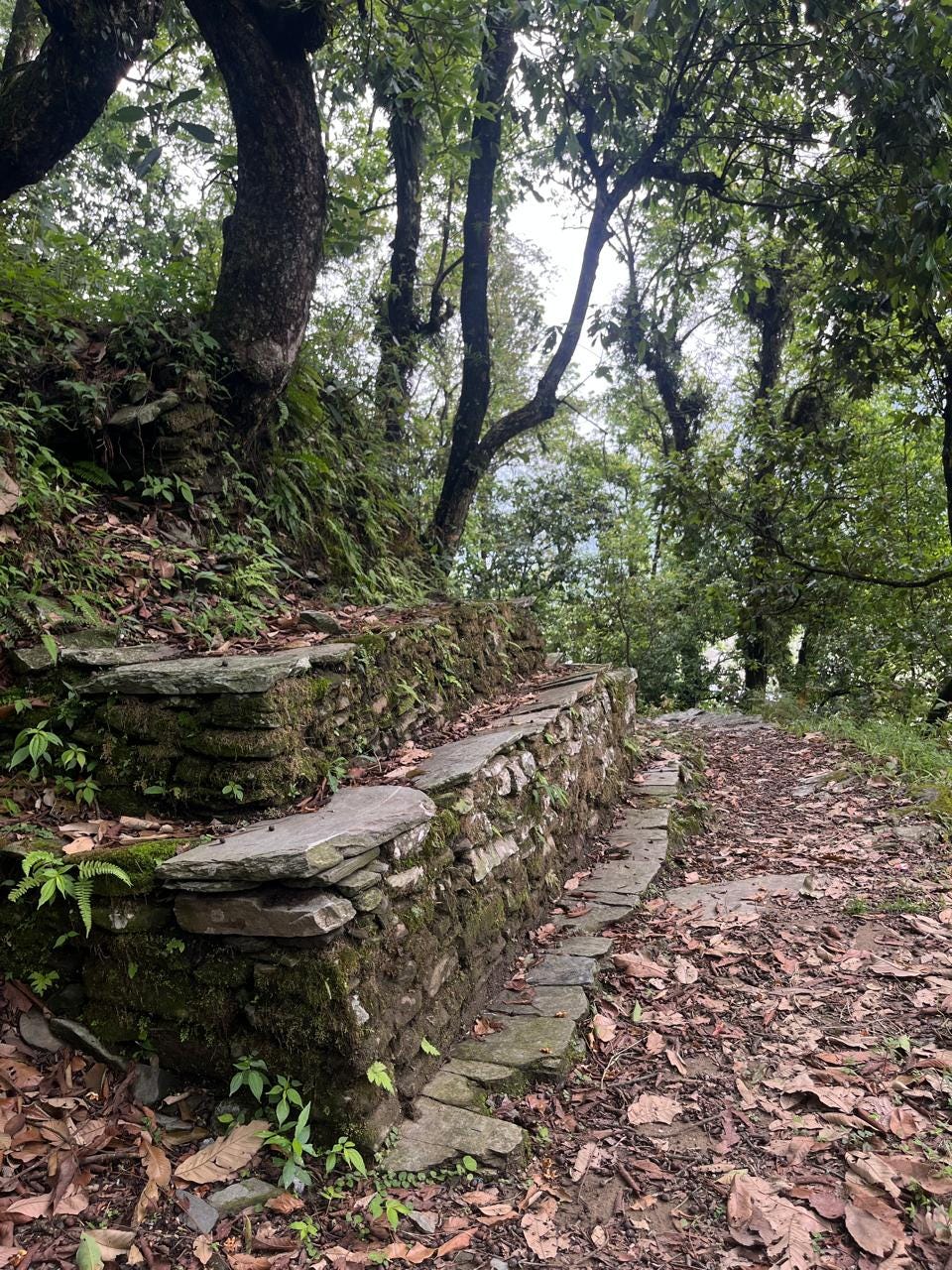
Trail from Astam to Mardi river: Pic: Ramesh Bhushal
I would say there is only one “ism” prevailing in Nepal right now: Cementism. Forget Capitalism or Communism; those are just names. Our leaders buy cement, put money in their pockets, build ugly structures around these mountains, and call it development. If you don’t believe me, look at the concrete tiger built near Pokhara in Baglung district. It cost $2,000 USD, and it isn’t a tiger for sure. It’s a shame.
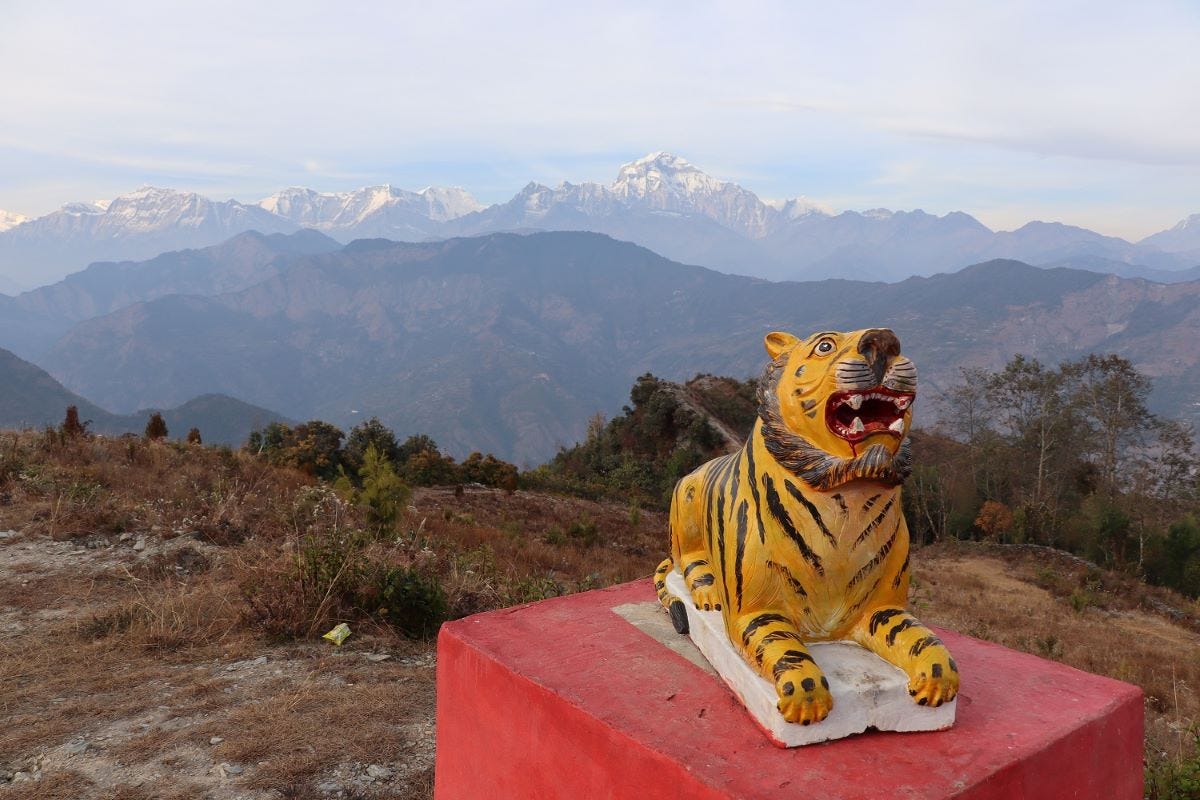
Laughing (crying) Tiger in Baglung district made by the public money, uff. Picture Courtesy: Setopati.com
These kinds of structures are popping up all over the country, including mini “Great Walls,” like the one in Shailung. It’s weird to build a mini Great Wall when you already have the planet’s tallest mountain range. If you question it, they will say, “F*ck your idea.” I am getting older, so I am trying to learn these young words with ‘F’ to keep myself young. Sorry for that.
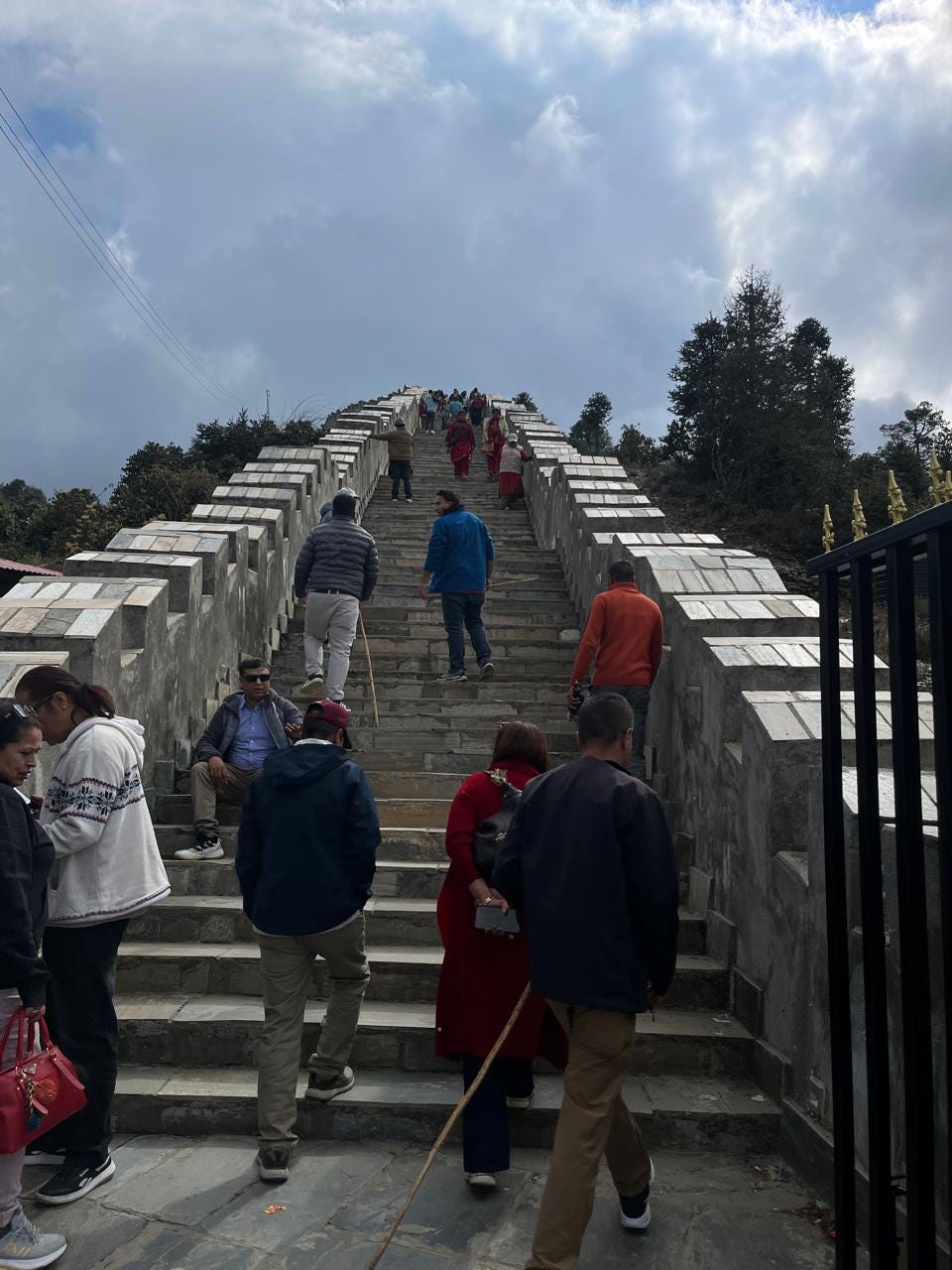
Mini Great Wall in eastern Nepal’s Dolakha district. Pic: Ramesh Bhushal
From Astam, I walked to Lwang. It took four hours. It was a nice day; the sun hid above the clouds, coming down occasionally to check on me. I walked through the jungle and reached the banks of the Mardi river. My footsteps were the only noise alongside chirping birds and cicadas singing. Unfortunately, the roadside hotels mostly sell packaged junk food and beer. In Khora ko Mukh, I met a bunch of old men. That’s the reality of the mountains now: the youth are leaving the country, sending money back so the older generation can live a bit longer and play cards or chat in Chautari—a common seating place in villages.
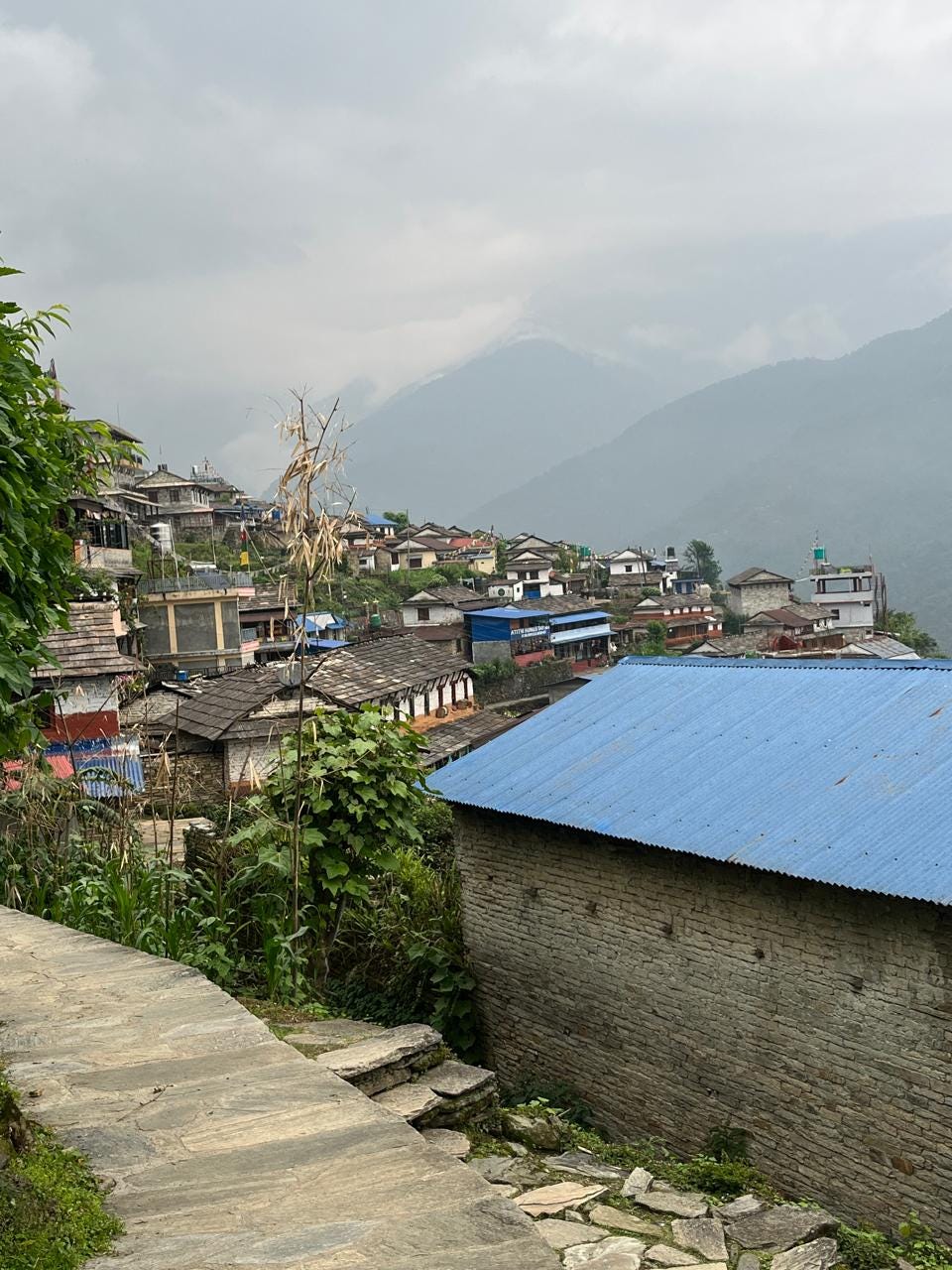
Lwang village. Pic: Ramesh Bhushal
A long-tailed minivet chirped as I climbed uphill to Lwang, a beautiful Gurung village. Near the top, I met an old man in his 80s singing while herding his buffaloes.
He told me, “Look at these mountains, look at this green place. It’s a natural hospital, but all the young people have left. Feel pity for them. I have a home in Pokhara, but I was sick, so I came back here. Look, I am healthy now.”
He kept singing, and nature was at its best.
Eating Dal Bhat in Nepal is the best thing you can do. They say, Dal Bhat Power, 24 Hour. I ate some and had a bottle of Barahsinghe Beer. People love to name beers after the wildlife they kill—Tiger, Rhino, Arna. Apparently, putting their names on beer bottles is our best way to protect biodiversity. It was cheap, though. The whole meal cost nearly $10 USD. In London or New York, that would barely buy you a glass of beer. If you come from the West, it’s like buying a beer and getting a free lunch. Please come to the mountains. Nepal needs tourists who can afford to spend a bit and who care about the environment as well. Otherwise, you end up as a Jhole Tourist— travelers escaping their own countries just to live cheaply. But don’t worry, you can be a jholey as it’s your planet too. You can be a bit nice jholey.
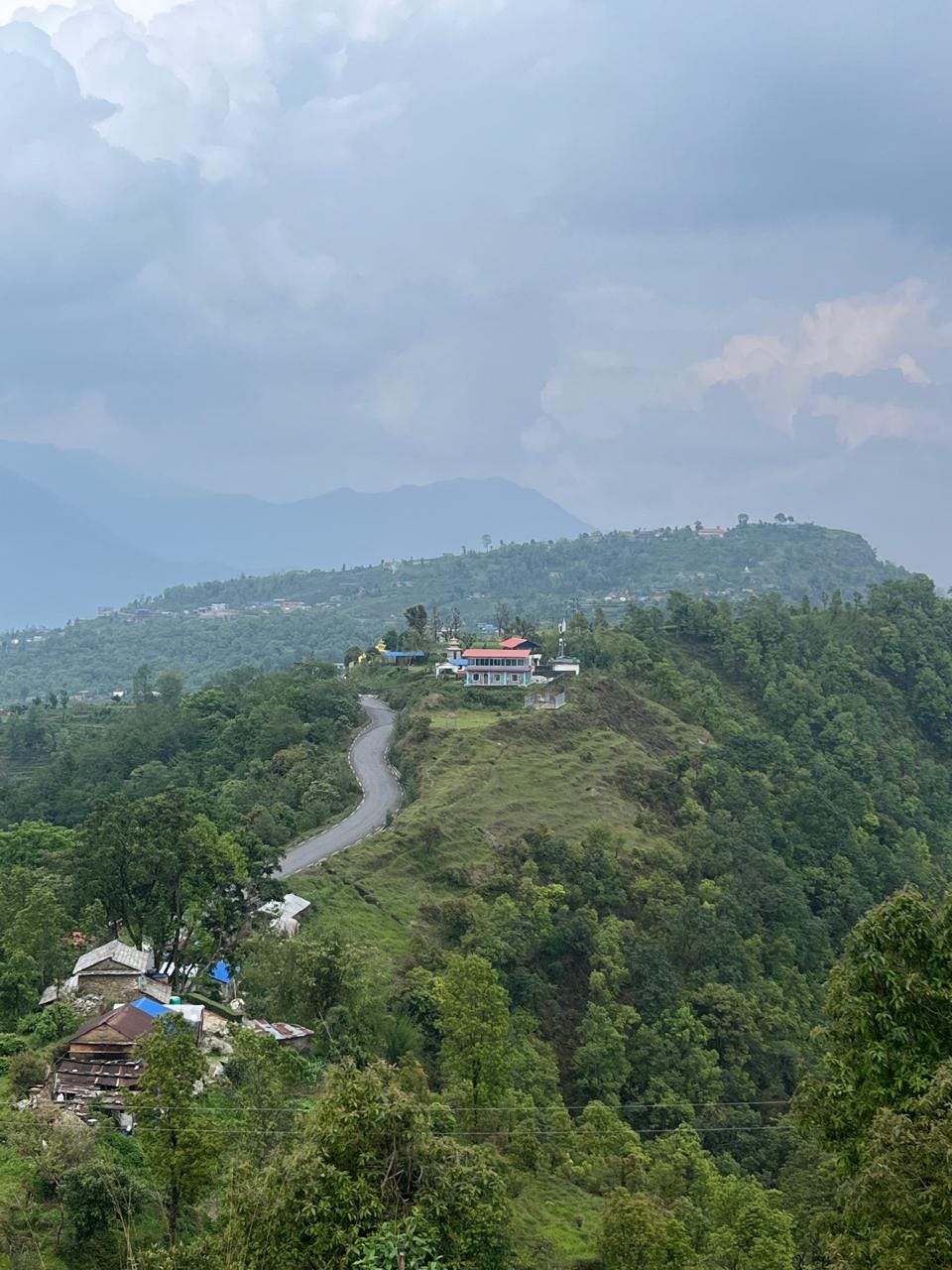
By 4 PM, it was raining a bit, but the meal pushed me to reach Dhampus by 7 PM. Pre-monsoon rains have lashed the region over the past few weeks. This is unusual, and the heavy pre-monsoon rainfall is worrying people, especially as a drier monsoon has been forecast. Monsoon hasn’t arrived yet. Not only rains, but there has been unusual snowfall this year. This is what Climate change would do. Bring more unusual things and unease to you and the planet.
I found a beautiful trail along an old motorable road that hadn’t been in operation for years, complete with a stunning suspension bridge. I wish I could live right next to it. Who wouldn’t want to stay nearby? But the villages nearby are nearly empty.
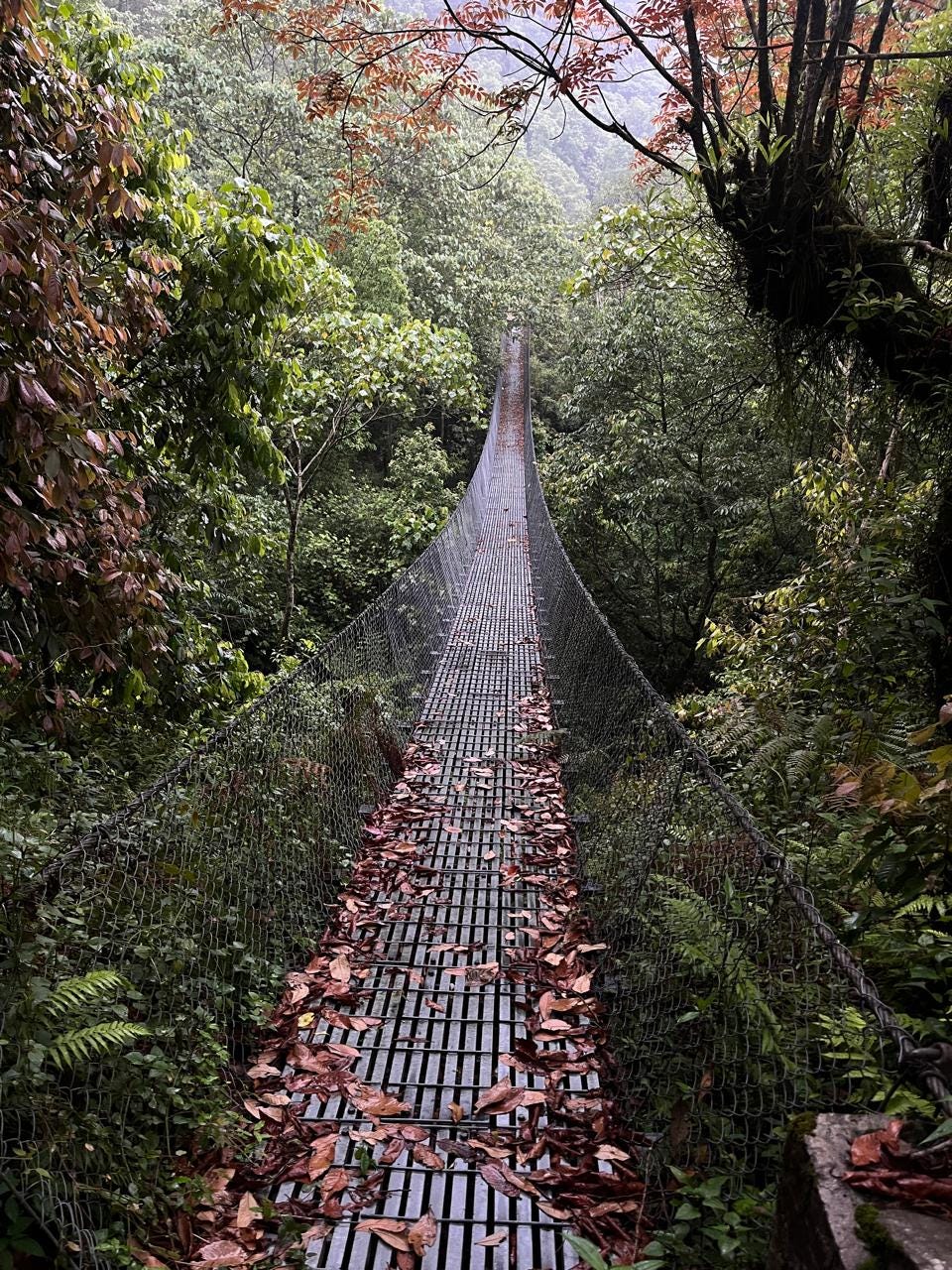
A bridge on the way from Lwang to Dhampus. Pic: Ramesh Bhushal
When I arrived at Dhampus, the hotel owner noted a major shift: “In the past, every young person used to have a plow (Halo), but now every young person has a motorbike.”
The mountains are changing fast. Roads are cutting through the hills, the youth are leaving, and the elderly are left waiting. It leaves you with mixed feelings. I always wonder: what keeps people in the mountains, and what forces them out? Will people ever return? What is keeping me from returning? Is it just money, or is there something else? I am back with more questions than answers. I am a very confused man, but that gives me an excuse to go back time and again. If you want to see the mountains, please go now and hold them in your eyes, keep them in your memories. They are changing fast.
I wrote it all. AI was used to check grammar only.
My next newsletter will cover the Bay of Bengal. I am just back from Dhaka. Do send any comments or compliments:). I won’t mind.
Nice piece Ramesh. I have been watching thr growth of cementism along the Annapurna trails over the last 20 years or so and the modernization of the roads and it makes me sad.
I enjoyed reading this, Ramesh. It made me want to walk in those mountains.